
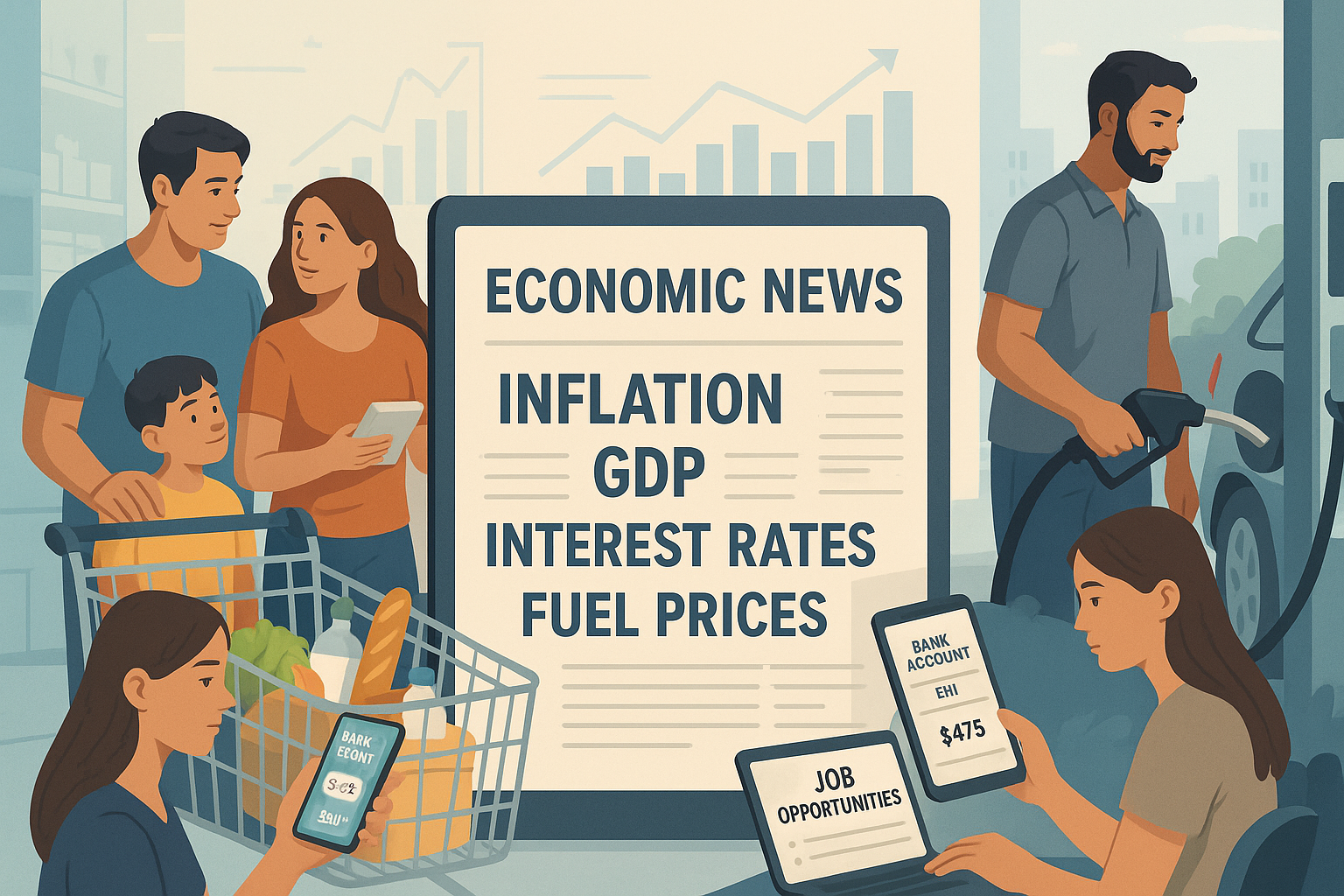
Economic news often sounds confusing, filled with complex terms like inflation, GDP, interest rates, and recession. Many people skip it because they think it’s only meant for economists or investors. However, economic news directly impacts your daily life—from grocery prices and fuel costs to job opportunities and loan EMIs. Understanding the basics can help you make smarter financial decisions and stay prepared for changes.
What Is Economic News?
Economic news covers updates related to a country’s money system, business activities, employment, government spending, and overall financial health. It includes information about prices, taxes, interest rates, trade, and growth. Simply put, economic news explains how money moves in the economy and how it affects people and businesses.
Inflation – Why Prices Keep Rising
Inflation means a general increase in prices over time. When inflation rises, the value of money decreases, meaning you can buy less with the same amount. If food, fuel, and household items become more expensive, inflation is usually the reason. Moderate inflation is normal, but high inflation can reduce savings and increase living costs.
For beginners, remember this: higher inflation = higher daily expenses.
Interest Rates – Loans and Savings Explained
Interest rates are set by central banks and affect how expensive or cheap borrowing money is. When interest rates go up, loans for homes, cars, and education become costlier, and EMIs increase. On the positive side, higher interest rates often mean better returns on savings accounts and fixed deposits.
Economic news about interest rate changes helps you decide when to take a loan or when to save more.
Employment and Job Market News
Economic reports often include data about employment and unemployment. When companies are hiring more, it’s a sign of a healthy economy. Rising unemployment indicates economic slowdown, fewer job opportunities, and reduced income growth.
For students and job seekers, employment-related economic news gives insight into which sectors are growing and which are struggling.
GDP – Measuring Economic Growth
GDP (Gross Domestic Product) measures the total value of goods and services produced in a country. When GDP grows, it means the economy is expanding, businesses are performing well, and income opportunities increase. When GDP slows down or falls, it may lead to job cuts and lower spending.
You don’t need to calculate GDP—just know that higher GDP growth usually means better economic conditions.
Government Budget and Taxes
The government budget outlines how much money the government earns and spends. Economic news related to budgets includes changes in taxes, subsidies, welfare schemes, and infrastructure spending. These decisions affect income tax, fuel prices, education costs, and public services.
For common people, budget-related economic news explains where your tax money goes and how policies impact your expenses.
Fuel Prices and Currency Value
Fuel prices are influenced by global markets and currency value. If the national currency weakens, imports become expensive, increasing fuel and product prices. Economic news about currency exchange rates helps explain why fuel prices fluctuate.
In simple terms: a weak currency often leads to higher costs of living.
Stock Market vs Economy – Not the Same Thing
Many beginners think the stock market represents the entire economy, but that’s not always true. Stock markets react quickly to news, while the economy changes gradually. A rising stock market doesn’t always mean prices are falling or jobs are increasing.
Economic news helps you understand the real economy beyond market headlines.
Why Beginners Should Follow Economic News
You don’t need expert knowledge to understand economic news. Even basic awareness helps you:
- Plan savings and investments
- Manage household expenses
- Choose better career paths
- Prepare for financial risks
Following simplified economic news builds financial confidence and awareness.
Conclusion
Economic news is not just for experts—it’s for everyone. From rising prices and job trends to interest rates and government decisions, economic updates shape your everyday life. By understanding basic concepts like inflation, GDP, and interest rates, beginners can make smarter choices and stay prepared for changes. A little knowledge goes a long way in building financial stability.