
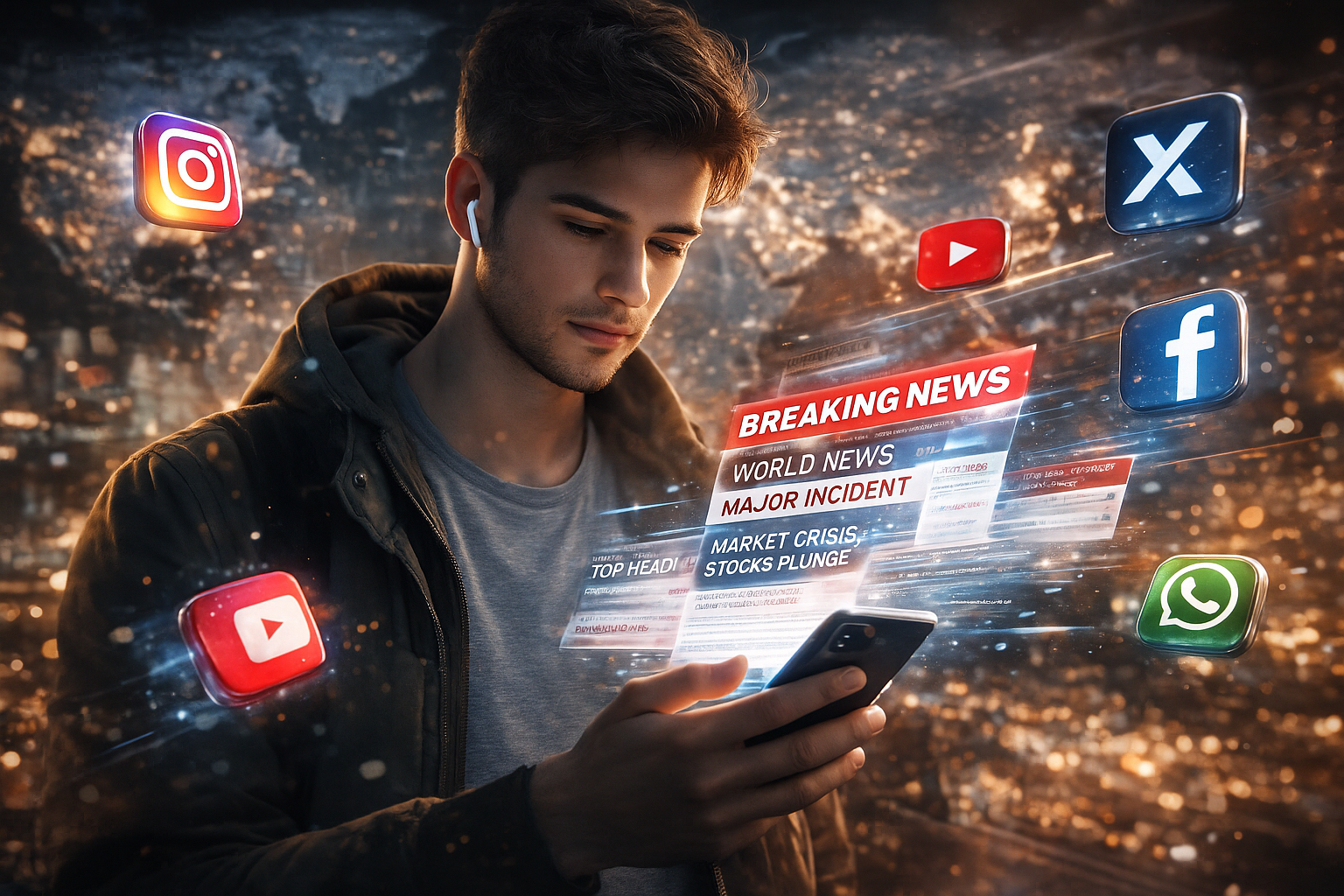
The way people consume news has changed dramatically over the past decade. Traditional sources like newspapers, television news channels, and radio are no longer the primary platforms for breaking news. Today, social media has become the first stop for news updates for millions of people around the world. Platforms like Instagram, X (Twitter), Facebook, YouTube, and WhatsApp now shape how information is discovered, shared, and discussed.
News Is Now Instant and Real-Time
One of the biggest changes social media has brought is speed. News now breaks in real time, often directly from eyewitnesses. A single post, tweet, or video can reach millions within minutes, sometimes even before official media outlets report it. This has made news consumption faster but also more chaotic, as information spreads before being fully verified.
Short-Form Content Is Replacing Long Reports
Social media platforms encourage short, bite-sized content. Instead of reading long articles, users now consume headlines, short videos, reels, and infographics. While this makes news more accessible, it also reduces attention spans and encourages surface-level understanding rather than deep analysis. Many users form opinions based on a single post or clip instead of full context.
Personalized News Feeds Shape Opinions
Algorithms decide what news you see. Social media platforms analyze your likes, shares, and watch time to show content that matches your interests and beliefs. While this personalization keeps users engaged, it also creates filter bubbles, where people only see news that supports their existing views. This can limit exposure to diverse perspectives and fuel polarization.
Anyone Can Be a News Source
Earlier, news came only from professional journalists and media houses. Today, anyone with a smartphone can report news. Influencers, bloggers, independent journalists, and even ordinary users now act as information sources. While this democratizes news, it also increases the risk of misinformation, fake news, and biased reporting.
Rise of Video-Based News Consumption
Video content has become dominant. Platforms like YouTube, Instagram Reels, and short video apps are changing how people understand current events. News is now explained through visuals, reactions, and commentary rather than traditional reporting. This makes news more engaging but sometimes sensationalized to gain views and shares.
Trust in Traditional Media Is Shifting
Many young audiences trust social media creators more than traditional news channels. Influencers who explain news in simple language often feel more relatable than formal anchors. However, this shift also raises concerns, as not all creators follow journalistic ethics or fact-checking standards.
Misinformation Spreads Faster Than Ever
One of the biggest challenges of social media news consumption is fake news. False information spreads faster than corrections because sensational content gets more engagement. Without careful verification, users may unknowingly share misleading news, impacting public opinion and decision-making.
News Is Now Interactive
Unlike traditional media, social media allows users to comment, debate, react, and share opinions instantly. News consumption has become participatory rather than passive. People no longer just read the news — they discuss it, remix it, and spread it within their communities.
Impact on Mental Health and News Fatigue
Constant exposure to negative news through social media feeds can lead to news fatigue, anxiety, and stress. Doom-scrolling has become common, making many users feel overwhelmed. As a result, some people are consciously reducing news consumption or choosing selective updates instead of continuous scrolling.
The Future of News Consumption
Social media will continue to play a major role in how news is consumed. However, the future likely demands better digital literacy, stronger fact-checking, and responsible sharing. Users must learn to question sources, cross-verify information, and balance speed with accuracy.
Final Thoughts
Social media has transformed news consumption by making it faster, more accessible, and more interactive. While it empowers individuals and amplifies voices, it also comes with challenges like misinformation, bias, and reduced attention spans. In this evolving digital age, the responsibility lies not only with platforms and creators but also with users to consume news wisely and critically.